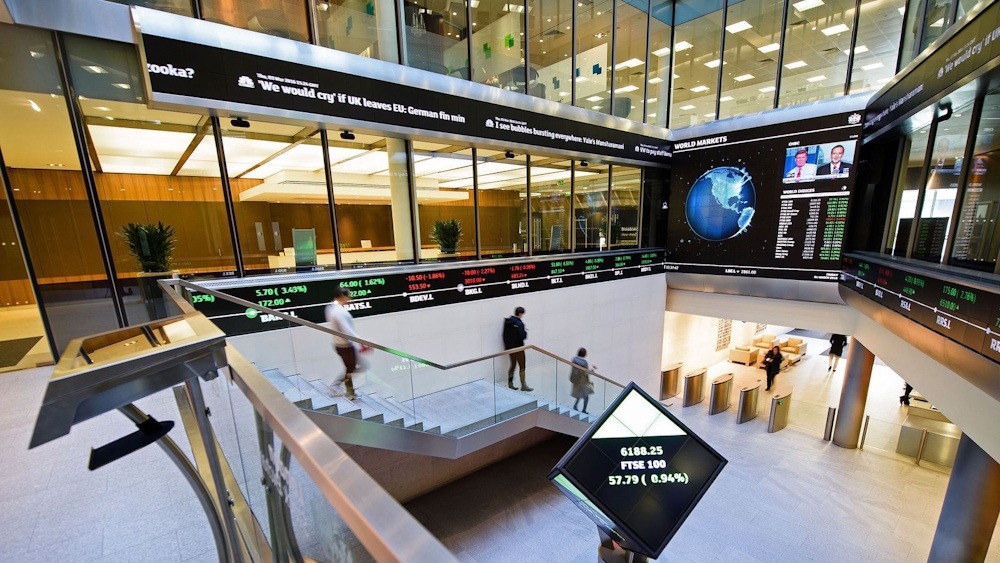
As a result of weakness in the mining, defence, and finance industries, the FTSE 100 index, which measures the performance of the UK stock market, fell on Friday, settling close to its five-month lows. The market’s decline was mitigated in large part by improvements in healthcare and consumer equity. Despite Anthropic’s record IPO and fairly good first outing on Wall Street on Thursday, the tone was pessimistic because of a sell-off in technology across global markets. Close to half an hour before lunchtime, the FTSE 100 dropped 63.53 points, or 0.61%, to finish at 10,389.15. Ithaca Energy saw a 5.5% drop in its value. The value of Polar Capital Technology Trust Holdings fell by 5%. The following companies saw their valuations drop: Halma, Standard Chartered, Computacenter, Lion Finance, Scottish Mortgage, Metlen Energy & Metals, Babcock International, Pershing Square Holdings, Rolls-Royce Holdings, Alliance Witan, HSBC Holdings, Spirax Group, and Weir Group. The drops ranged from 2% to 4%.
Significant declines were seen by the following companies: Diploma, Balfour Beatty, Aberdeen Group, F&C Investment, Informa, JD Sports Fashion, AutoTrader Group, Standard Life, BP, and Shell. Stocks in Standard Chartered Bank fell 3.7%, HSBC Holdings down 2.2%, and Barclays fell 1.8%. A decrease of about 1.2% was reported by Lloyds Banking. In the mining industry, Antofagasta saw a fall of about 2.7%. A decline in value of 1% to 1.4% was recorded by Anglo American Plc, Endeavour Mining, Glencore, and Rio Tinto. Reckitt Benckiser saw a 2.15 percent increase. There was a rise of 1% to 1.7% at Unilever, Haleon, Admiral Group, Coca-Cola Europacific Partners, Airtel Africa, Associated British Foods, Coca-Cola HBC, GSK, British American Tobacco, Smith & Nephew, Bunzl, Diageo, Tesco, Sainsbury (J), and AstraZeneca.
October retail sales in the UK rose 0.7% from the previous month, following a 0.6% decline, according to the data. We expected sales to stay about the same. The 0.9% decline in September was more than offset by an unexpected 0.9% month-on-month increase in retail sales, when motor fuel is excluded. The predicted decline in sales was 0.1%. After growing at a slower pace of 0.4% in September, retail sales growth accelerated in October, reaching 2.3%. Retail sales, excluding motor fuel, increased by 2.5%, following a 0.4% increase the previous month. Sales at retail establishments rose 0.4% from the previous quarter in the three months ending in October. While grocery shop volumes rose during this time, fuel retailer volumes mostly bounced back from a drop in the three months preceding July, following a surge in March.
On a separate note, a monthly poll by GfK, a market research firm, found that British consumers’ confidence increased in November, perhaps due to their increased inclination to make large purchases in preparation for Christmas. After falling to -24 in October, the consumer mood index improved to -22 in November. The UK GfK Consumer Confidence Index saw a modest rebound in November, rising 2 points to -22, after falling to -24 in October—its worst monthly drop since the COVID-19 pandemic began. According to the UK’s Office for National Statistics, October’s net borrowing by the public sector was lower than anticipated. In October, the government borrowed 17.0 billion GBP, which is an increase of 0.8 billion GBP compared to the same period previous year. Nevertheless, the expected amount of GBP 18.0 billion was not met by this sum. Total interest payments on government debt reached GBP 11.2 billion in October, an increase of GBP 2.8 billion from the previous month.