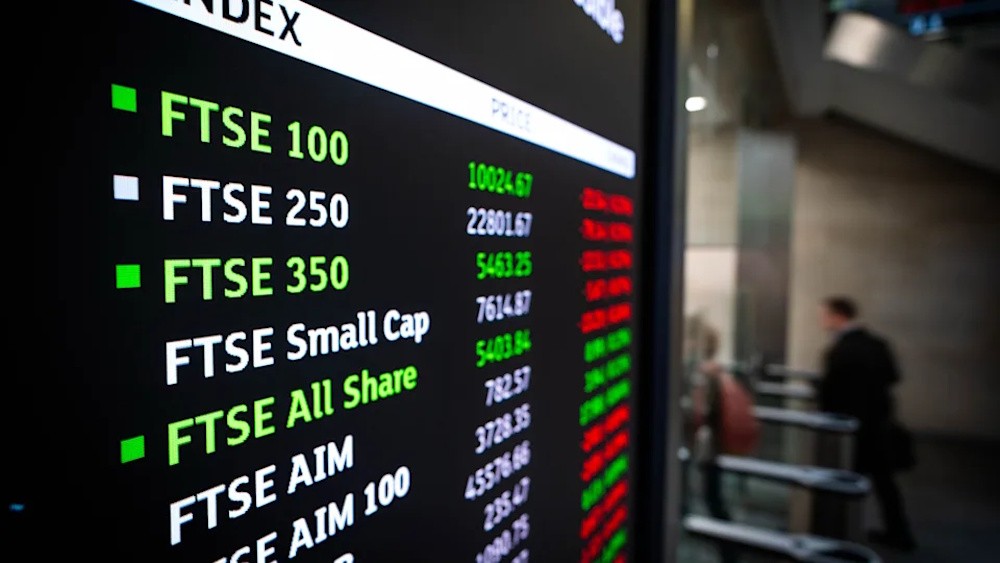
UK stocks declined on Tuesday as investors refrained from taking on risky positions in anticipation of quarterly results from AI leader Nvidia. Meanwhile, mixed labour market data maintained expectations for a rate hike by the Bank of England.
The blue-chip FTSE 100 index fell 0.66% to 10,809.49 points by 1057, while the midcap FTSE 250 slipped 0.8%.
- Wall Street’s recent tech selloff has extended its impact to global markets, as the tightening of US restrictions on AI chip sales to China has intensified worries regarding the speed and returns of substantial investments in AI.
- The pan-European STOXX 600 slipped 0.7% after the benchmark touched record highs last week.
- Nvidia’s third-quarter earnings due after the market close on Tuesday are in focus following the sudden exit of CEO Jensen Huang.
- “Despite its limited exposure to AI, the UK market could not entirely shake off the negative sentiment in markets as tech stocks chalked up further losses,” Russ Mould said.
- IQE opened new tab rose 1.4% after the chip components maker raised its annual outlook following a forecast of over 40% revenue growth in fiscal 2026, driven by demand from AI-focused data centers.
- Imperial Brands announced it will cut up to 4,600 jobs, representing 16%-18% of its workforce, by 2030 as the tobacco maker intensifies cost-cutting measures in response to declining cigaret volumes and increasing costs.
- Leading the losses were banks and industrial metal miners, which fell 0.7% and 1.9%, respectively.
- Wage growth in the UK decelerated to 3.6% during the third quarter, coinciding with a decline in job vacancies to their lowest level since 2021. However, unemployment dipped to 4.6%, presenting a mixed picture for inflation pressures and maintaining the possibility of a December BoE rate increase.
- Traders perceive a probability of approximately 90% for a Bank of England rate increase in December, a figure that remains largely stable following the release of the employment data, according to LSEG data.
- “The period of softness in the labor market is over, which removes a hurdle to further Bank of England rate hikes,” said Kathleen Brooks.