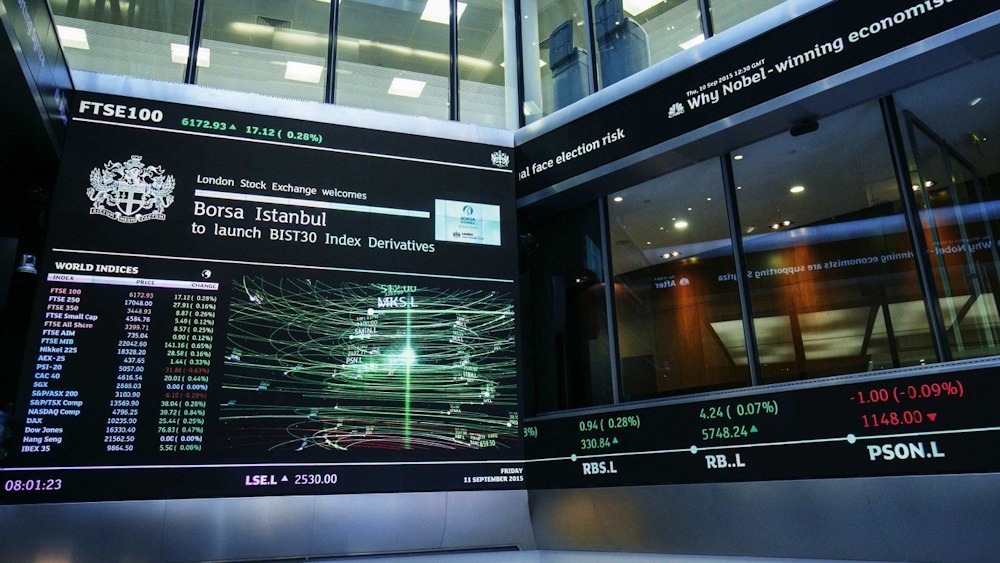
London shares experienced an uptick on Friday, driven by declining oil prices and a decrease in gilt yields, which bolstered market sentiment. This movement positioned the primary UK indexes to conclude a week characterised by volatility with modest gains.
The blue-chip FTSE 100 index rose 0.7% to 10,516.25 points by 1045, while the midcap FTSE 250 climbed 1.2%.
- Oil prices softened following U.S. President Donald Trump’s assertion that Washington would refrain from military action against Iran prior to next month’s U.S. elections, amidst what he characterised as constructive discussions aimed at resolving a conflict that has unsettled global energy markets.
- British government bond yields have also retreated, with 10- and 30-year gilt yields easing after reaching new multi-decade highs earlier this week.
- For the week, the FTSE 100 and FTSE 250 were poised to register modest gains, rebounding from erratic trading influenced by elevated oil prices and revived apprehensions regarding inflation, borrowing expenses, and the trajectory of interest rates.
- Shares in Airtel Money opened flat in their London debut on Friday, marking a steady start to one of London’s most significant listings in years following a heavily oversubscribed offer.
- Airtel Money’s stock opened at £1.96, consistent with its IPO price.
- Telecom stocks experienced significant declines following SpaceX’s acquisition of a nationwide portfolio of low-band spectrum licenses, which positions Starlink Mobile to emerge as a formidable player in the US telecom market.
- Vodafone, Airtel Africa, and BT Group experienced declines ranging from 2.5% to 5.4%, positioning them as the weakest performers within the FTSE 100.
- On the FTSE 250, SSP Group, owner of the Upper Crust chain, fell 4% after forecasting annual operating profit slightly below its previous expectations.
- Morgan Advanced Materials opened new tab rose 8.7% after RBC Capital Markets upgraded the chip-components supplier and lifted its price target, citing the sale of its Thermal Products unit and greater exposure to higher-margin aerospace and defence markets.