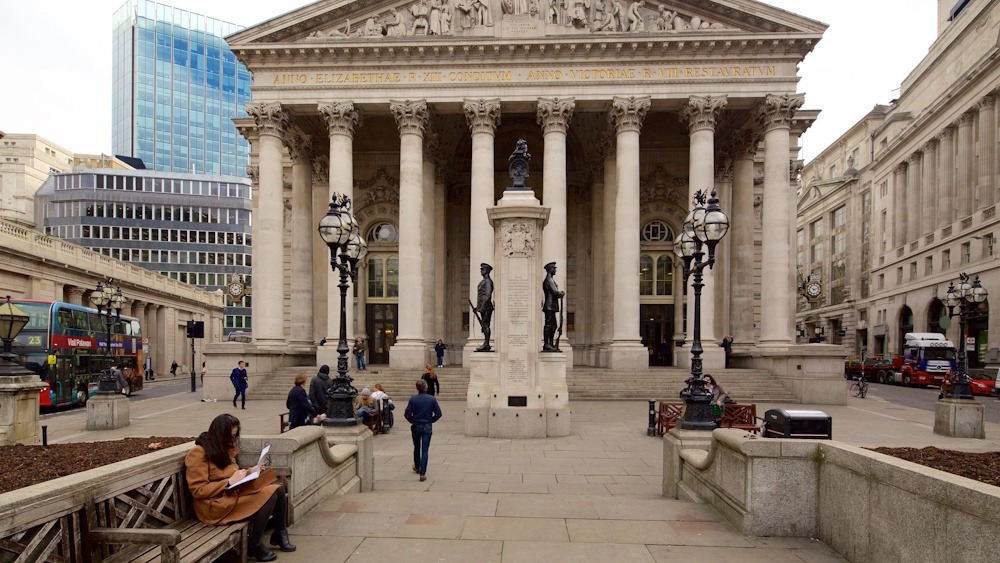
The FTSE 100 experienced a decline early Friday, driven by banking shares that fell amid concerns over potential tax raids. In contrast, broader markets exhibited a more stable demeanour, as comments from the CEO of Nvidia alleviated some of the prevailing uncertainties in the technology sector. The FTSE 100 index experienced a decline of 28.58 points, representing a decrease of 0.2%, closing at 10,811.77. It remains elevated by 2.5% this week, nonetheless. The FTSE 250 in London increased by 52.97 points, representing a rise of 0.2%, reaching a level of 24,477.74. Meanwhile, the AIM All-Share experienced an uptick of 3.21 points, or 0.4%, settling at 768.30. The Cboe UK 100 experienced a decline of 0.3%, settling at 1,072.22. In contrast, the Cboe UK 250 saw an increase of 0.2%, reaching 21,462.57. Meanwhile, the Cboe Small Companies index registered a slight decrease of 0.1%, standing at 18,799.11. In Paris, the CAC 40 experienced a decline of 0.2%, whereas the DAX 40 in Frankfurt saw an increase of 0.6%. Major banks were exerting pressure on the FTSE 100. Lloyds experienced a decline of 2.3%, NatWest saw a reduction of 2.2%, while Barclays registered a decrease of 0.6%. Additionally, RBC has downgraded Lloyds to ‘sector perform’, exerting further pressure on the stock.
UK Chancellor John Healey is preparing to impose increased taxes on Britain’s banks in his budget scheduled for October 28, aiming to mitigate the adverse effects on public finances caused by the conflict in the Middle East, as reported. To maintain the Treasury’s deficit reduction objectives amid increasing borrowing costs for the UK government, the Guardian reports that Healey has opted to engage the financial sector for supplementary revenue. One option reportedly under consideration – reversing cuts to the bank surcharge implemented by former chancellor Jeremy Hunt – could generate over £2 billion annually, according to the source. The largest banks and building societies in the UK are presently subject to a surcharge of 3% in addition to the standard 25% corporation tax rate, along with a levy imposed on the assets recorded on their balance sheets. The 3% surcharge was decreased from 8% under the previous chancellor, concurrently with an increase in corporation tax from 19% to 25%. UK banks incur a 3% surcharge on annual taxable profits that exceed a £100 million threshold. Metro Bank shares rose 3.7% on Friday, distinguishing themselves as one of the top performers in the FTSE 250, unaffected by the turmoil in the banking sector.
On Thursday, the US equity markets experienced an upward trajectory, with the Dow Jones Industrial Average increasing by 1.1%, the S&P 500 rising by 0.3%, and the Nasdaq Composite gaining 0.1%. The concerns surrounding the technology sector eased on Friday, as equities in Asia experienced an uptick following a positive close in New York. In Tokyo, the Nikkei 225 concluded with a gain of 1.4%, following a decline of nearly 5% on Thursday. The Shanghai Composite concluded the trading session with a gain of 0.2%, whereas the Hang Seng Index in Hong Kong experienced an increase of 0.5%. Sydney’s S&P/ASX 200 experienced an increase of 1.0%. Aiding the mood in tech were remarks by Nvidia boss Jensen Huang, who defended CoreWeave, which faced significant selling pressure as investors expressed concerns regarding its financial situation. Huang minimised the concerns, stating that CoreWeave is “improving every day”, as reported. “Their cost of capital is actually decreasing,” the Nvidia boss added. CoreWeave operates as a provider of a cloud platform specifically designed for artificial intelligence applications. Nvidia in January announced it made a $2 billion investment in CoreWeave. Analysts commented: “Financial markets have calmed a little after Coreweave stock bounced on Thursday. But the debate between intensifying price pressures needing tighter monetary policy and a tech correction requiring a softer policy outlook continues.”
The yield on the US 10-year Treasury was quoted at 5.08% early Friday, narrowing from 5.10% at the time of the London equities close on Thursday. The yield on the US 30-year Treasury remained unchanged at 5.42%. The pound was valued at USD1.3314, an increase from USD1.3254. Against the euro, sterling increased to EUR1.1843 from EUR1.1828. The euro strengthened to USD1.1237 from USD1.1204. Against the yen, the dollar was trading at JPY157.96, a decrease from JPY158.16. Gold was priced at USD4,171.41 an ounce, an increase from USD4,152.39. Brent oil experienced a decline, trading at USD105.33 per barrel, a decrease from the previous USD106.33. US President Donald Trump characterised Ukraine’s recent attacks on Russian oil refineries as a “disgrace,” in an interview released on Thursday. “Well, I think that’s a disgrace,” Trump told when asked about Ukraine’s renewed strikes, adding that they were driving up global energy prices. The 80-year-old US leader criticised his Ukrainian counterpart Volodymyr Zelensky, claiming that he was less inclined than Russian President Vladimir Putin to seek a compromise to conclude the conflict. “It should end soon. I think they actually both would like to see it end,” Trump said. Friday’s global economic calendar features eurozone inflation figures alongside a US industrial production report. Back in London, Man Group experienced an increase of 2.0%. Man Group reported an increase in assets under management during the third quarter, bolstered by net inflows of approximately USD10 billion. Assets under management reached USD270.9 billion at the end of the September 30 quarter, reflecting an increase of 6.8% from USD253.6 billion in June.
Net inflows amounted to USD10.1 billion, as reported by Man, with the majority originating from the long-only equity segment. A favourable investment performance increased the assets under management by USD5.9 billion. Net inflows accelerated in the third quarter, reaching USD10.1 billion, surpassing the USD7.1 billion reported by Man for the entirety of the first half of 2026. Iofina shares declined by 9.1%. The iodine producer reported “significant” strategic progress in the third quarter; however, output fell short of expectations. Its Iofina Resources arm produced 205.2 metric tonnes of crystalline iodine during the period, down from 215.8 a year prior. The output was “lower than anticipated due to lower-than-expected total water volumes at our plants, plant maintenance” and delays to the completion of one pipeline and the commissioning of another. “Suppliers to plants in our central Oklahoma core area have implemented new upgrades which initially required certain disposal wells to be shut down while performing this work. The company believes this is just a timing of many factors, and we can confirm that water volumes have improved as we collectively work back to the brine flows to previous levels,” Iofina said. Owing to diminished water levels at the facilities and subsequent delays, the forecast for output in the second half has been adjusted to approximately 440 to 455 metric tonnes. Its prior projection spanned from 460 to 485.