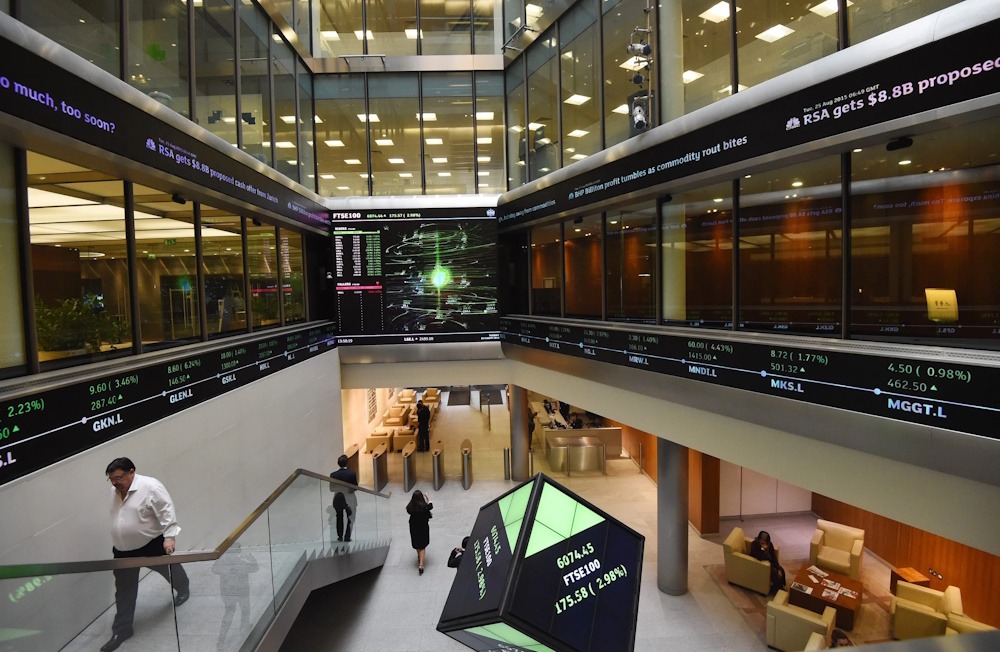
British stocks continued to decline on Wednesday following U.S. President Donald Trump’s announcement that the ceasefire with Iran was “over,” exacerbating an already significant escalation in tensions between the U.S. and Iran in the Strait of Hormuz, which resulted in a surge in oil prices. The FTSE 100 experienced a decline of 1.61% as of 05:14. Germany’s DAX experienced a decline of 2.54%, whereas France’s CAC 40 saw a decrease of 2.23%, both reflecting a continuation of losses from earlier in the session. Sterling reversed its trajectory against the dollar, declining by 0.22% to $1.3324 after initially trading at a modestly higher level. Speaking on the sidelines of the NATO summit in Ankara, Turkey, Trump characterised Iran’s leadership as “sick” and described engagement with them as “a waste of time,” shortly after the U.S. targeted over 80 Iranian sites overnight. Bahrain activated missile alert sirens for the third time on Wednesday morning as hostilities escalated between Iran and Kuwait in the wake of U.S. military strikes. Iran’s Revolutionary Guard announced that it had targeted U.S. military installations in both countries, alleging that Washington had breached a ceasefire understanding.
Meanwhile, Kuwait’s Army reported that its air defences were “confronting hostile missile and drone attacks.” Iranian state media reported explosions in the port city of Bushehr, which is home to Iran’s only civilian nuclear power plant; however, no casualties have been confirmed. The strikes followed accusations against Iran for its involvement in attacks on three commercial vessels navigating the Strait of Hormuz. “U.S. Central Command forces have begun launching a series of powerful strikes against Iran to impose heavy costs,” CENTCOM said. Washington has revoked a sanctions waiver that previously permitted Iran to sell oil, a decision that Iran’s foreign ministry has described as a “clear violation” of the memorandum established last month.
Parliament Speaker Mohammad Bagher Qalibaf stated, “The era of bullying and extortion is over. It leads nowhere. We don’t fold.” Oil extended its rally sharply following Trump’s comments. Brent crude increased by 6.27% to $78.78 a barrel, whereas WTI experienced a rise of 6.42% to $74.99, reflecting a gain that is more than double its previous increase. Commodities strategists observed that the front end of the Brent curve has reverted to backwardation. Concurrently, API data indicated a decline of 400,000 barrels in US crude inventories last week, accompanied by more pronounced reductions in petrol and distillate stocks. Intensifying Ukrainian drone strikes on Russian refineries have tightened diesel supply, resulting in the ICE gasoil crack rising back above $50 a barrel.
European petrol prices have contributed to the tightening scenario, with TTF increasing by over 4% to surpass €48/MWh, driven by below-average storage levels. Gold reversed lower as the oil-driven risk sentiment took precedence. Futures declined by 2.27% to $4,063.70 an ounce, whereas spot gold decreased by 1.26% to $4,054.66, indicating a departure from the previously mixed outlook. Strategists highlighted that China’s central bank has extended its gold-buying streak to a 20th consecutive month in June, indicating a structural support. This development occurs alongside near-term movements that are influenced by changing Fed rate expectations in anticipation of this week’s FOMC minutes.