
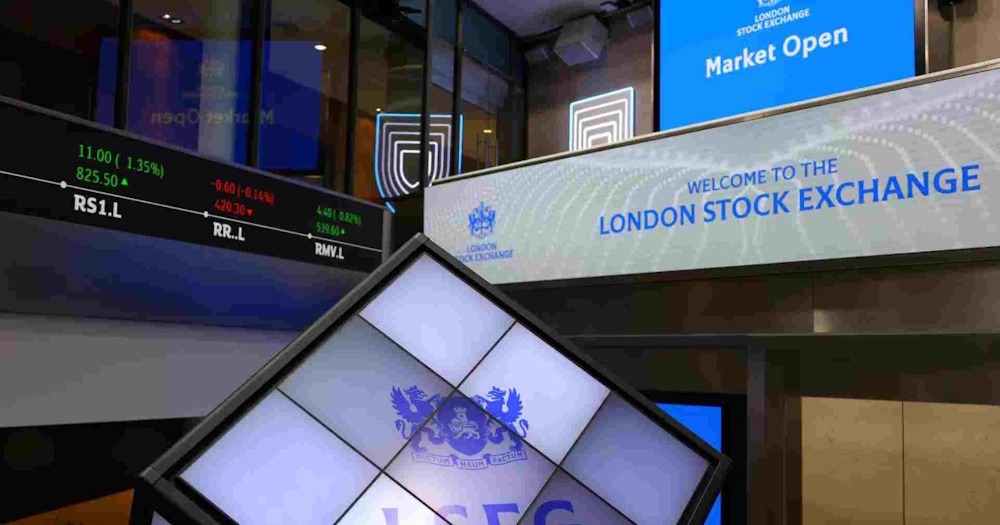
London’s primary stock indexes continued their downward trajectory on Friday, as the escalating conflict in the Middle East intensified inflation concerns, complicating the Bank of England’s monetary policy perspective, while energy companies benefitted from rising oil prices. The blue-chip FTSE 100 was down 0.3% by 1058, while the mid-cap FTSE 250 fell 0.7%. Both indexes were poised for a second consecutive weekly loss. Movements in global markets were monitored, reflecting a decline as the U.S.-Israel conflict concerning Iran approached the two-week mark, exhibiting no indications of de-escalation. Markets are preparing for a prolonged conflict, as U.S. President Donald Trump intensifies his rhetoric towards Iran, while Tehran commits to maintaining the closure of the Strait of Hormuz.
UK heavyweight energy index was up 1.3% with oil majors BP and Shell up 1.5% and 1.3%, respectively, as crude prices traded above $100 a barrel. Most other sub-indexes were in the red, with miners down 2.1%, making them the day’s worst performers. Meanwhile, data from the ONS indicated that Britain’s economy experienced stagnation in January, characterized by flat GDP, subdued services, and escalating energy-price risks stemming from the Iran conflict, which has intensified investor concerns. “If the Strait of Hormuz re?opens by the end of March, the economic fallout should be limited, but a prolonged closure and persistently high energy prices pose the real risk,” said Jonathan Stubbs.
Money markets have dispelled expectations of a March rate cut from the Bank of England, as indicated by LSEG data. BofA has revised its anticipated timeline for the first Bank of England rate cut to June, citing risks associated with energy-driven inflation. This adjustment aligns with similar moves by Goldman Sachs, Standard Chartered, and Morgan Stanley, all of which have postponed their easing forecasts in light of the surge in oil prices linked to developments in Iran.
“Needing to avoid a depreciation in the pound that makes inflation worse, the Bank of England would likely shelve interest rate cuts for the rest of the year,” said Stubbs. Among individual stocks, HSBC and Standard Chartered fell 1% each as both are heavily invested in the Gulf’s rise as a global finance hub, and have seen operations disrupted as the Iran conflict rattles their Middle East ambitions.