
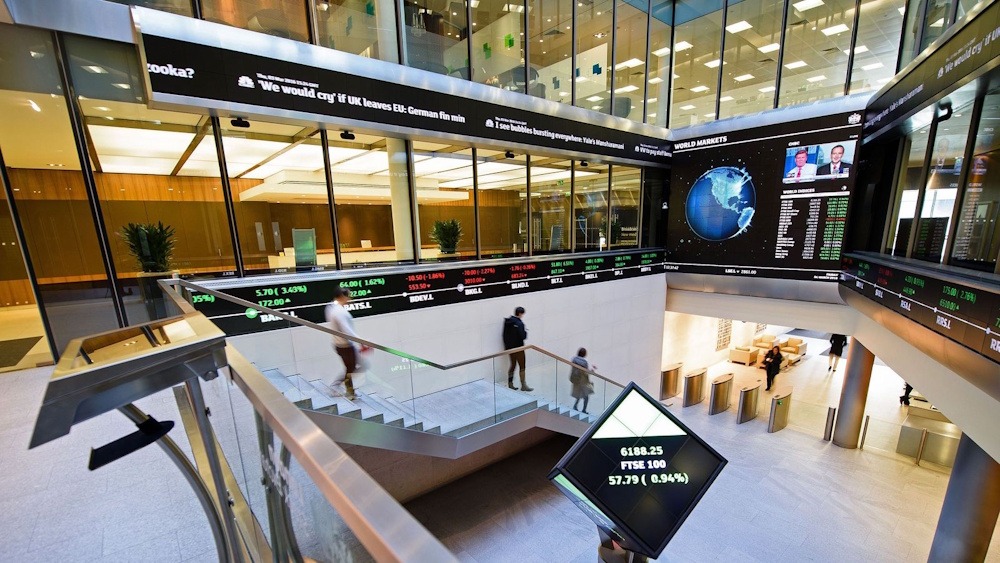
On Friday, London’s FTSE 100 reached a new record high, positioning itself for an eighth consecutive monthly increase, driven by significant contributions from major mining companies as ongoing tariff concerns heightened safe-haven demand for certain commodities. The blue-chip FTSE 100 rose 0.5% to 10,900 points as of 1022, while the mid-cap FTSE 250 was up 0.2%, remaining less than 2% from its 2021 peak.
Precious-metal miners and industrial-metal miners rose as demand for gold and copper increased, with investors flocking to safe-haven assets amid uncertainty over U.S. tariff policies and heightened tensions between the United States and Iran. Mining stocks have significantly contributed to the gains of the FTSE 100 over the past year, bolstered by ongoing tightness in commodity markets and robust metals pricing. The FTSE 100 is poised to achieve its most extended monthly winning streak since the period of 2012–2013.
The index recorded a 6.6% increase in February, surpassing U.S. and European benchmarks, driven by optimism regarding a potential rate cut by the Bank of England in March, which bolstered market sentiment. At times, however, gains have been moderated by concerns that emerging AI tools could undermine established business models, alongside trade-related uncertainties stemming from U.S. President Donald Trump’s recent tariffs earlier this month. Among others, Rightmove rose 4.7% to the top of the benchmark index after the UK’s biggest property portal posted in-line annual profit and announced a 90 million pounds share buyback.
Wizz Air slid 10.5% after major shareholder Indigo Partners sold 10 million shares at 1,250 pence apiece in a placement worth about 125 million pounds. Senior was up 18.2% after the engineering firm announced it had received several takeover approaches in recent months and is considering two, with talks ongoing with an undisclosed bidder. On the political front, Prime Minister Keir Starmer’s Labour Party experienced a setback against the Green Party in a Manchester ward it had held for nearly a century, highlighting the fragmentation of Britain’s traditional two-party system.